
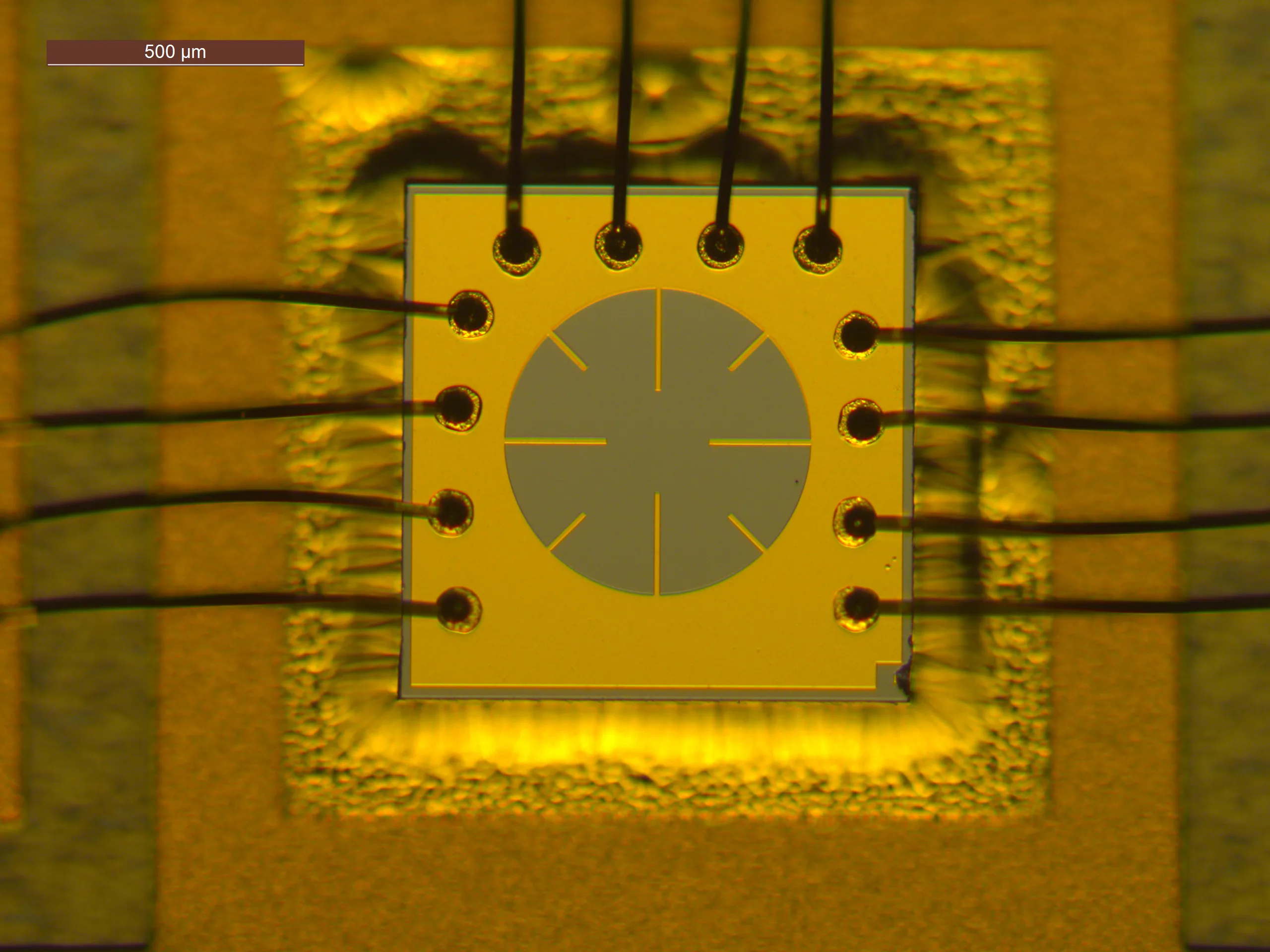
GC Light Achieves 200 mW Room-Temperature CW Output from a 1.3 μm Quantum-Dot PCSEL
GC Light has recently reached a new milestone in the development of 1.3 μm InAs/GaAs quantum-dot photonic crystal surface-emitting lasers (PCSELs), achieving 200 mW of room-temperature continuous-wave (CW) output power and setting a new CW output benchmark among reported comparable 1.3 μm quantum-dot PCSEL devices.
Single-mode laser chips operating at 1.3 μm are core light sources for high-speed optical communication modules and can be used to drive silicon-photonic modulators. This performance milestone indicates that, in terms of CW output power under single-mode operation, GC Light's PCSEL has begun to show the potential to surpass mainstream quantum-well distributed-feedback (DFB) lasers, further underscoring the promise of quantum-dot PCSELs for ultra-high-speed silicon-photonic interconnect modules.
The 1.3 μm wavelength lies in the fiber O-band, offering near-zero chromatic dispersion together with relatively low fiber loss, which makes it particularly suitable for high-speed interconnect scenarios such as data centers and supercomputers. Today, most commercial single-mode CW light sources at this wavelength are based on InP quantum-well structures. However, due to material limitations and the constraints of narrow-ridge single-mode waveguides, their single-mode output power faces a physical ceiling and struggles to keep pace with the rising bandwidth demands of silicon-photonic interconnects.
Quantum-dot materials, by contrast, provide stronger three-dimensional carrier confinement and atom-like discrete energy levels. As a result, quantum-dot lasers offer excellent temperature stability, along with stronger tolerance to optical feedback and radiation, enabling stable operation without active cooling or optical isolators. In addition, the GaAs material platform supports larger wafer sizes and lower material cost, helping reduce overall system cost. For these reasons, quantum-dot PCSELs are widely regarded as a promising light-source platform for next-generation AI compute clusters, pluggable optical modules in large-scale data centers, and co-packaged optics (CPO) interconnects.
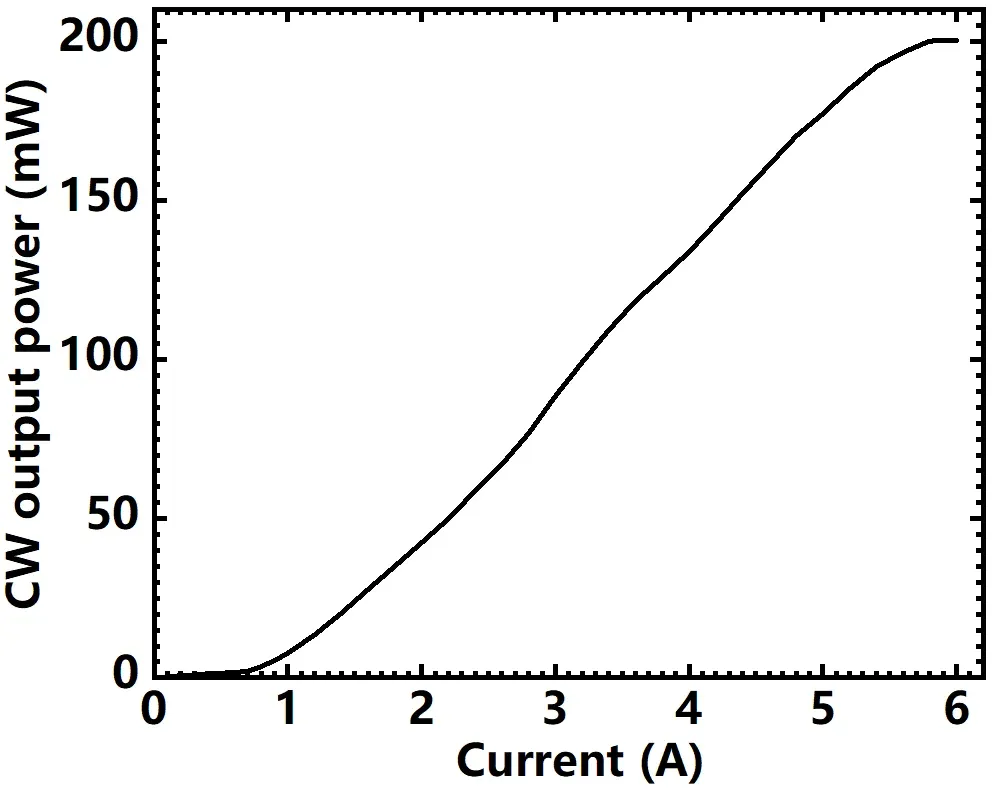
Continuous output power curve
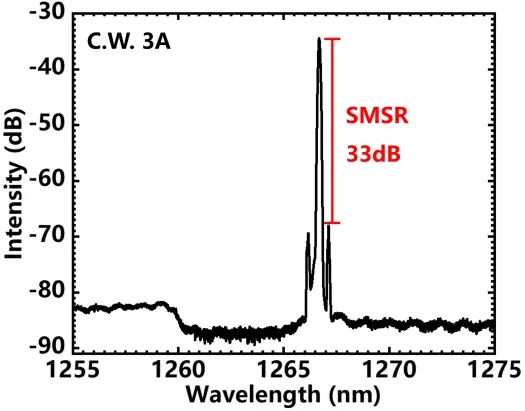
Optical spectrum
GC Light has worked on quantum-dot PCSEL technology for many years. In 2019, the team first proposed a flat-band-enhanced quantum-dot PCSEL structure and demonstrated 13.3 mW of room-temperature CW output together with 150 mW of pulsed output, while comparable devices at the time were limited to roughly 2 mW and pulse-only operation. In 2025, the team reported the first room-temperature CW operation of a buried quantum-dot PCSEL in Optics Express, including a threshold current as low as 139 mA. Building on that result, continued optimization of quantum-dot epitaxy and photonic-crystal fabrication has now pushed CW output power to 200 mW, marking another important step toward practical GaAs-based quantum-dot PCSELs.
The team will continue to optimize device structure and process flow, targeting 400 mW to 800 mW of CW output at 1310 nm while also advancing PCSEL development at 1550 nm, 1064 nm, and other wavelengths to provide more cost-effective, high-quality light sources for industry.
Need full specs and pricing?
Contact our engineering team for datasheets and application support.
GC Light Achieves Watt-Class Continuous-Wave Output from a 940 nm PCSEL Chip
GC Light has achieved a major breakthrough in 940 nm photonic crystal surface-emitting laser development, demonstrating room-temperature continuous-wave output power exceeding 1 W.
Our Project Wins the National Disruptive Innovation Competition Award
Our high-performance photonic crystal laser project won the national outstanding award, highlighting both technical breakthroughs and commercialization potential.